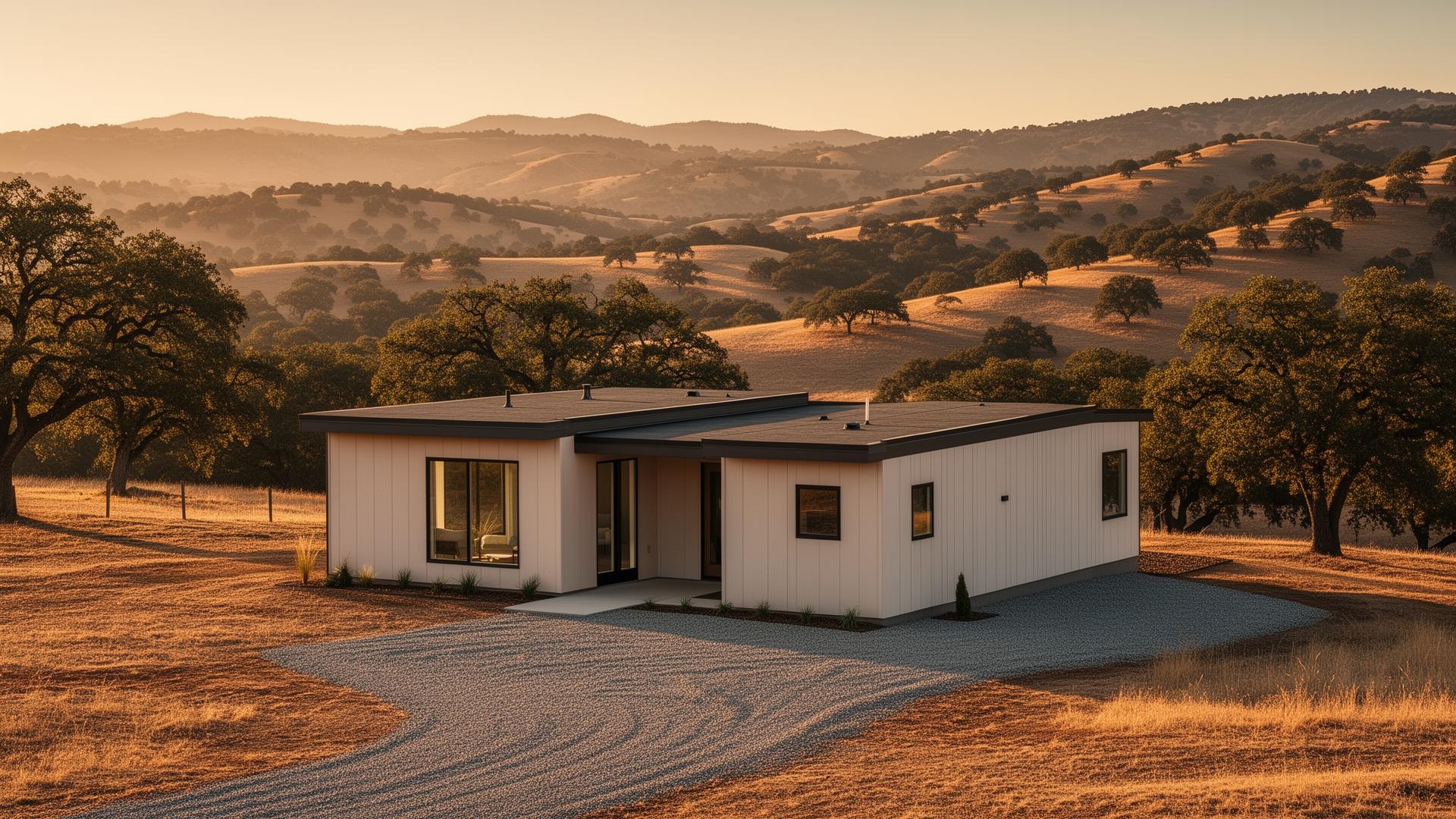
This is the working procedural guide Nestably uses on every Shasta County project — which department handles what, in what order, what the actual review timelines look like, and where projects most commonly stall. If you're placing a manufactured home in Redding, Anderson, Cottonwood, Palo Cedro, Shingletown, or anywhere in unincorporated Shasta County, this walks the whole process.
Start with a written zoning verification from Shasta County Planning Division for your specific parcel. Most residential (R-1), rural residential (R-R), agricultural residential (AR), and exclusive agricultural (EA) zones permit manufactured homes on permanent foundations, but minimum parcel size, setback distances, and secondary-unit rules vary by zone and by whether the parcel is in a specific plan area (Palo Cedro Community Plan, Shingletown Community Plan, etc.).
Ask Planning for the parcel's zoning classification, permitted use list, setback schedule, minimum parcel size, and any specific plan or overlay district that applies. This step catches the vast majority of expensive surprises before you spend any money on engineering or ordering a home.
Step 2
Order the septic perc test the same week you close on land.
For any parcel not on municipal sewer — which is most of the county — Shasta County Environmental Health governs septic. Perc results drive septic design, and septic design gates your building permit. The perc test itself is a one-day site visit by a licensed engineer, but the results can take 2–4 weeks to work through Environmental Health.
If your soil doesn't perc for a standard septic, alternative systems (mound, sand filter, engineered treatment) are available but add cost and time. Ordering the perc test early is the single most consequential timing decision in the entire project.
Step 3
Book the well driller (if applicable).
Rural Shasta County parcels are typically on private wells. Well permits go through Environmental Health. Drilling contractors in the region often run 6–12 week waitlists, especially in spring and summer. Book your driller as soon as you have the well permit approved — do not wait for foundation or delivery timing.
Step 4
Engineer the foundation to HCD 1P standards.
Your foundation must be permanent and engineered to California HCD standards for real-property financing and 433A recording. In Shasta County, most foundations are perimeter concrete stem-wall with a full crawl space or slab, engineered by a California-licensed civil or structural engineer with manufactured home experience. Foundation plans are submitted with the building permit application.
Typical foundation cost in Shasta County: $18,000–$40,000 depending on parcel slope, soils, and design. Sloped parcels or those requiring deep footings run higher.
Step 5
Submit the building permit to Shasta County Building Division.
Shasta County Resource Management — Building Division reviews the complete permit package: HCD-certified home plans, engineered foundation plans, site plan, septic design, well information, utility plan, driveway/access plan, and any required Cal Fire defensible-space and access review. First-round review typically runs 4–8 weeks. Prepare for at least one round of corrections — clean corrections that come back quickly can add just 1–2 weeks; sloppy corrections add much more.
Building permit — Building Division
Septic permit — Environmental Health
Well permit — Environmental Health
Encroachment permit — Public Works (new driveway on county road)
Cal Fire access + defensible space — SRA parcels
PG&E service application — parallel to permit review
Step 6
Coordinate delivery, set, and inspections.
Factory build typically runs 8–14 weeks. Delivery is coordinated with your foundation completion and utility rough-ins. On delivery day, the home sections are craned into place, joined, and the marriage line is finished on-site. Utility connections follow. Building Division conducts multiple inspections: foundation, framing/marriage-line, electrical, plumbing, and final. Cal Fire may inspect defensible space and access separately.
Step 7
Record HCD Form 433A.
After final inspection, HCD Form 433A is filed with the Shasta County Recorder, which converts the home from personal property to real property fixed to your parcel. This step is what unlocks conventional refinancing, real-property tax treatment, and the appreciation curve of a site-built home. Nestably handles this filing as a standard part of every project.
Keep exploring
Related Nestably resources
Everything below is built by the same team, with the same honest guidance.
Which Shasta County department handles the building permit?
Shasta County Resource Management — Building Division handles the building permit for unincorporated Shasta County. Inside Redding, Anderson, and Shasta Lake city limits, the respective city building departments handle permits instead. Septic and well permits go through Environmental Health Division.
How long does Shasta County take to review a manufactured home permit?
First-round review typically runs 4–8 weeks for a well-prepared submittal in unincorporated Shasta County. Corrections and resubmittals add 2–4 weeks each. The single biggest driver of delay is incomplete engineering — especially foundation plans and septic design.
What's the biggest reason projects get delayed in Shasta County?
Late septic perc tests. Perc results drive septic design, which drives site engineering, which drives the building permit. Starting the perc test the same week you close on land — not months later — is the single biggest thing you can do to protect the timeline.
Do I need a Cal Fire review?
Yes, if your parcel is in a State Responsibility Area — which is most of unincorporated Shasta County. Cal Fire reviews defensible space (100-foot minimum around the home) and driveway/access standards (14-foot clear width, 15% max grade, fire-apparatus turnaround if the driveway exceeds 150 feet).
What does the full permit stack cost in Shasta County?
Combined permit and impact fees for a typical single-family manufactured home in unincorporated Shasta County usually run $8,000–$16,000 depending on the parcel, square footage, and utility connections. Cities within the county can be higher. Your Nestably advisor will produce a written estimate for your specific project.
Ready to talk with a local Nestably advisor?
One free consultation. Real numbers. A plan built around your family.